
Published December 19, 2025
🏙️ Is Renting or Buying Better in Philadelphia Right Now?

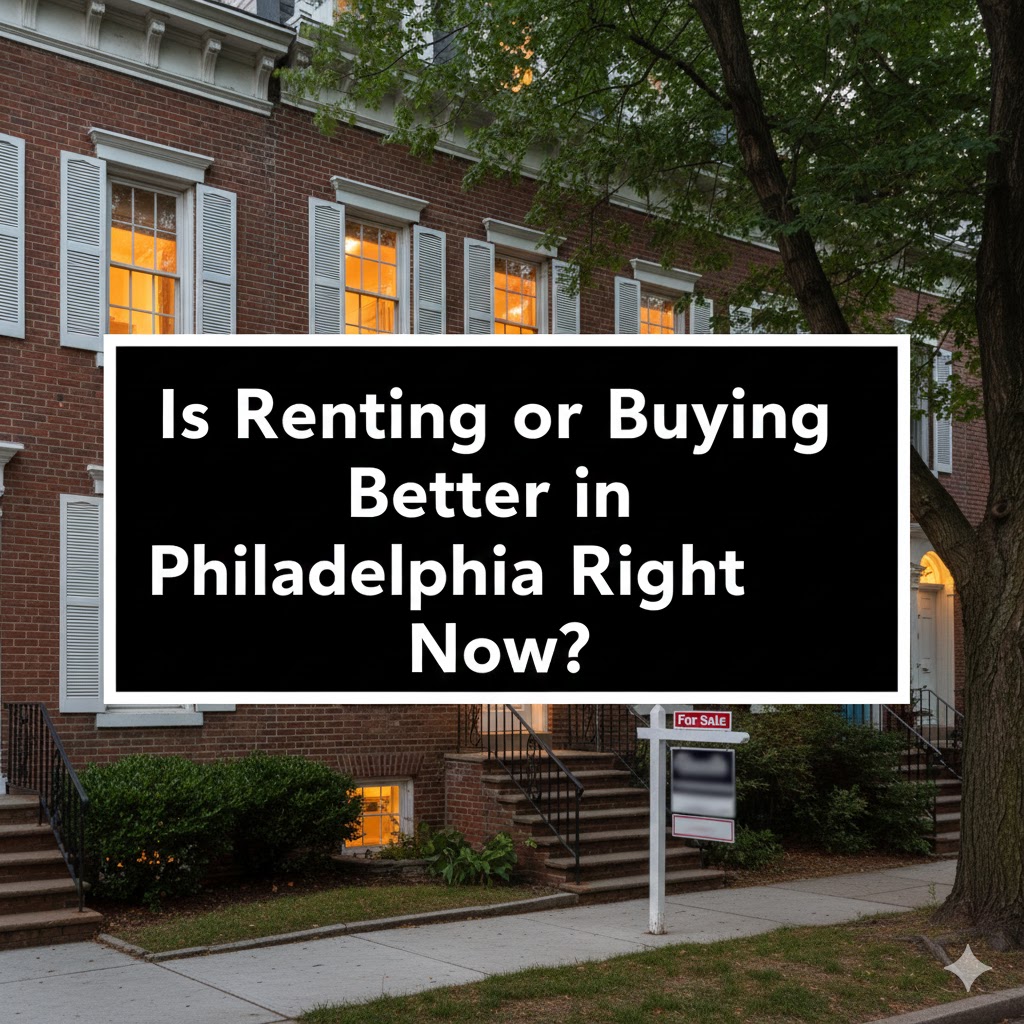
One of the most common questions I hear from clients in Philadelphia right now is:
“Should I keep renting, or does it finally make sense to buy?”
With rent prices continuing to rise, interest rates fluctuating, and home values holding strong across many Philly neighborhoods, the rent vs buy decision in Philadelphia has become more nuanced than ever.
In this 2025 market breakdown, we’ll look at real numbers, current trends, and long-term considerations to help you decide whether renting or buying makes more sense for you right now.
📊 Philadelphia Housing Market Snapshot (2025)
Before comparing renting vs buying, it’s important to understand the current Philly market:
-
Home prices remain relatively affordable compared to other major East Coast cities
-
Inventory is still tight in desirable neighborhoods
-
Buyer demand is steady, especially for move-in-ready homes
-
Rent prices continue to climb due to limited rental inventory
Philadelphia remains one of the most affordable major cities for homeownership — but the gap between renting and buying is shrinking in some areas.
One of the most common questions I hear from clients in Philadelphia right now is:
“Should I keep renting, or does it finally make sense to buy?”
With rent prices continuing to rise, interest rates fluctuating, and home values holding strong across many Philly neighborhoods, the rent vs buy decision in Philadelphia has become more nuanced than ever.
In this 2025 market breakdown, we’ll look at real numbers, current trends, and long-term considerations to help you decide whether renting or buying makes more sense for you right now.
🏠 The Cost of Renting in Philadelphia (2025)
Rent prices in Philadelphia have increased significantly over the past few years, especially in popular neighborhoods.
Average Monthly Rent (Approximate):
-
1-bedroom apartment: $1,600–$2,000
-
2-bedroom apartment: $2,000–$2,600
-
Luxury or prime neighborhoods: $2,800+
Popular rental areas like Fishtown, Northern Liberties, Center City, Graduate Hospital, and Manayunk continue to see strong demand — which keeps upward pressure on rent.
Downsides of Renting:
-
Rent increases year over year
-
No equity being built
-
Limited control over the property
-
No tax benefits
-
Long-term costs add up quickly
While renting offers flexibility, it provides no long-term financial return.
🏠 The Cost of Renting in Philadelphia (2025)
Rent prices in Philadelphia have increased significantly over the past few years, especially in popular neighborhoods.
Average Monthly Rent (Approximate):
-
1-bedroom apartment: $1,600–$2,000
-
2-bedroom apartment: $2,000–$2,600
-
Luxury or prime neighborhoods: $2,800+
Popular rental areas like Fishtown, Northern Liberties, Center City, Graduate Hospital, and Manayunk continue to see strong demand — which keeps upward pressure on rent.
Downsides of Renting:
-
Rent increases year over year
-
No equity being built
-
Limited control over the property
-
No tax benefits
-
Long-term costs add up quickly
While renting offers flexibility, it provides no long-term financial return.
🏡 The Cost of Buying in Philadelphia (2025)
Now let’s look at buying.
Median Home Prices (Approximate):
-
Rowhomes & condos: $300K–$450K
-
Updated single-family homes: $450K–$650K
-
Prime or luxury neighborhoods: $700K+
With today’s financing options, many buyers are surprised to learn they don’t need 20% down.
Typical Buyer Costs:
-
Down payment: 3%–5% for many buyers
-
Closing costs: 2%–4%
-
Monthly mortgage (often similar to rent in many areas)
In many Philly neighborhoods, a monthly mortgage payment can be comparable to rent — especially when factoring in rent increases over time.
💰 Rent vs Buy: A Side-by-Side Comparison
Renting in Philadelphia:
✔ Flexibility
✔ Lower upfront costs
❌ No equity
❌ Rent increases
❌ No tax benefits
Buying in Philadelphia:
✔ Build equity
✔ Stable monthly payment (fixed-rate loan)
✔ Potential appreciation
✔ Tax advantages
✔ Long-term wealth building
The key difference?
Buying turns your monthly payment into an investment instead of an expense.
📈 Long-Term Financial Impact
Let’s say you rent a $2,200/month apartment.
That’s:
-
$26,400 per year
-
$132,000 over 5 years
-
$264,000 over 10 years
All of that money goes to your landlord.
Now compare that to buying:
-
A portion of every payment builds equity
-
Your home may appreciate over time
-
You gain leverage through ownership
Even modest appreciation can significantly impact long-term net worth.
🧠 When Renting Still Makes Sense in Philly
Renting may be the better option if:
-
You plan to move within 1–2 years
-
Your income or job situation is uncertain
-
You’re not ready for maintenance responsibilities
-
You’re actively saving for a future purchase
Renting isn’t “bad” — it’s just temporary housing, not a wealth-building tool.
🧭 When Buying Makes More Sense
Buying may be the smarter move if:
-
You plan to stay 3+ years
-
Your rent is increasing annually
-
You want predictable monthly housing costs
-
You’re tired of landlord rules
-
You want to build long-term equity
Many first-time buyers in Philadelphia regret waiting — especially after seeing rents rise faster than home prices.
🏘️ Philadelphia Neighborhoods Where Buying Often Beats Renting
In 2025, buying often outperforms renting in neighborhoods like:
-
Roxborough
-
East Falls
-
Port Richmond
-
Bridesburg
-
Southwest Philly
-
Parts of Fishtown & Manayunk
These areas offer:
-
Lower entry prices
-
Strong appreciation potential
-
Monthly payments competitive with rent
Neighborhood selection plays a major role in the rent vs buy equation.
🔑 The Biggest Myth: “I’ll Wait Until Rates Drop”
Many renters are waiting on the sidelines hoping for lower interest rates.
Here’s the risk:
-
Home prices may continue rising
-
Competition may increase
-
Rent will almost certainly go up
Interest rates change — but buying power is a combination of price, rate, and competition.
Waiting isn’t always cheaper.
🏁 Final Verdict: Rent or Buy in Philadelphia in 2025?
There’s no universal answer — but for many people in Philadelphia, buying now makes strong financial sense, especially if you plan to stay put and want to build wealth.
Renting offers flexibility.
Buying offers stability, equity, and long-term upside.
The smartest move is understanding your numbers and options — not guessing.
🔑 The Biggest Myth: “I’ll Wait Until Rates Drop”
Many renters are waiting on the sidelines hoping for lower interest rates.
Here’s the risk:
-
Home prices may continue rising
-
Competition may increase
-
Rent will almost certainly go up
Interest rates change — but buying power is a combination of price, rate, and competition.
Waiting isn’t always cheaper.
🏁 Final Verdict: Rent or Buy in Philadelphia in 2025?
There’s no universal answer — but for many people in Philadelphia, buying now makes strong financial sense, especially if you plan to stay put and want to build wealth.
Renting offers flexibility.
Buying offers stability, equity, and long-term upside.
The smartest move is understanding your numbers and options — not guessing.


