
Published January 12, 2026
Owning a Short-Term Rental at the Delaware Beaches: What Buyers Need to Know in 2026

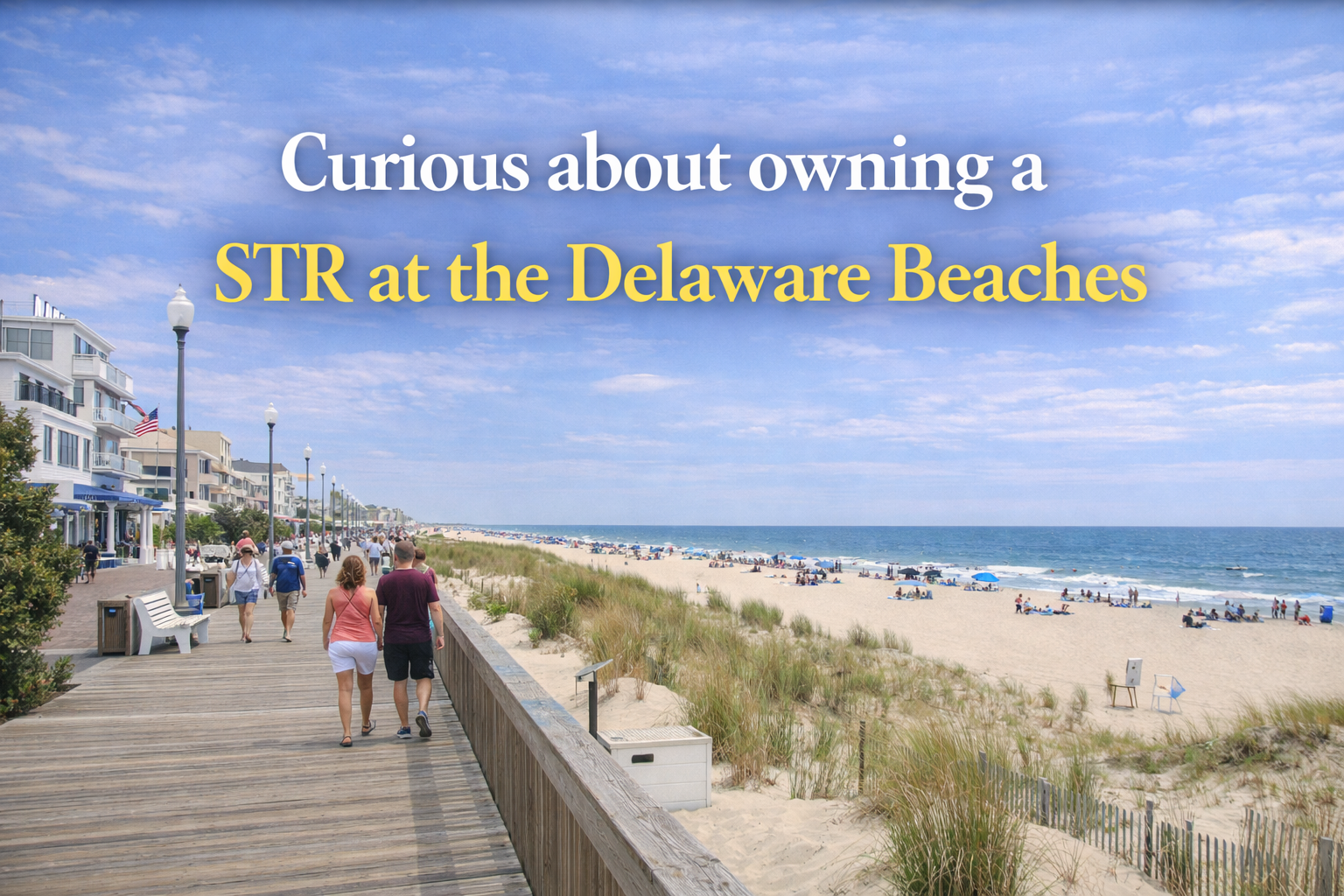
Owning a short-term rental (STR) at the Delaware beaches has become one of the most talked-about real estate strategies in the Mid-Atlantic—and for good reason. Strong seasonal demand, limited coastal inventory, and consistent tourism continue to make beach rentals attractive in 2026.
But owning an STR isn’t just about buying near the water and listing on Airbnb. Success comes from understanding location, regulations, seasonality, and realistic cash flow—especially in markets like Delaware Beaches, which include destinations such as Rehoboth Beach, Bethany Beach, Lewes, and Dewey Beach.
Here’s an honest, up-to-date look at what buyers should know about owning a Delaware beach STR in 2026.
Why the Delaware Beaches Remain Strong for STRs
Despite changing interest rates and tighter underwriting, the Delaware beach market remains resilient.
Key reasons STR demand stays strong:
-
Drive-to destination for Philadelphia, Baltimore, DC, and NYC
-
Limited supply due to coastline and zoning restrictions
-
Repeat visitors who return year after year
-
No Delaware sales tax, boosting visitor spending
These fundamentals help protect long-term value—even during market shifts.
Seasonality: The Reality Buyers Must Understand
Delaware beach STRs are highly seasonal, and that’s not a bad thing—if you plan correctly.
Typical STR Season Breakdown:
-
Peak season: Late May through September
-
Shoulder season: April, early May, October
-
Off-season: November through March
The most successful owners:
-
Generate the majority of annual income during peak months
-
Budget conservatively for the off-season
-
Use shoulder seasons for owner use or longer stays
STR success here isn’t about year-round bookings—it’s about maximizing high-demand weeks.
What Type of Properties Perform Best?
Not all beach homes perform equally as rentals.
Strong STR Performers:
-
Walkable-to-beach or walkable-to-town locations
-
3–5 bedroom homes (group-friendly layouts)
-
Properties with parking, outdoor space, or balconies
-
Townhomes and condos with amenities (where permitted)
Weaker STR Performers:
-
Properties far from beach access
-
Homes with restrictive HOA rules
-
Layouts that don’t accommodate groups well
Location and layout matter more than finishes.
Regulations & Zoning: What You Must Know
One of the biggest mistakes buyers make is assuming STRs are allowed everywhere.
In 2026:
-
Some towns require STR licenses or permits
-
HOAs may restrict or prohibit rentals
-
Occupancy limits and parking rules apply
-
Enforcement is stricter than in past years
Before buying, it’s critical to:
-
Verify town and county regulations
-
Review HOA bylaws carefully
-
Understand local tax and registration requirements
STR-friendly areas exist—but due diligence is essential.
Income Expectations: Be Conservative
Many buyers overestimate STR income by focusing on peak weeks only.
Smart underwriting in 2026 includes:
-
Conservative nightly rates
-
Realistic occupancy assumptions
-
Professional cleaning and management costs
-
Maintenance, utilities, insurance, and reserves
The strongest investors focus on net income, not gross projections.
Financing an STR at the Delaware Beaches
Financing is very different from a primary residence.
Buyers should expect:
-
Higher down payments
-
More documentation
-
STR income treated conservatively (or not counted initially)
-
Higher insurance costs
Some buyers choose:
-
Second-home financing (with limited rental use)
-
DSCR or investor loans
-
Long-term holds with appreciation focus
The right loan depends on your goals—not just rates.
Appreciation vs. Cash Flow: The Delaware Beach Balance
Delaware beach STRs often excel at:
-
Long-term appreciation
-
Lifestyle flexibility (owner use + rental income)
-
Inflation hedge through real assets
They may not always outperform year-round cash-flow markets—but they offer stability and lifestyle value that many investors prioritize.
Common Mistakes STR Buyers Make
Avoid these pitfalls:
-
Buying solely based on projected income
-
Ignoring local regulations
-
Underestimating maintenance and management
-
Choosing “cheap” over “right location”
-
Overleveraging with aggressive assumptions
The best STR investments are boring on paper and solid in reality.
Is Owning a Delaware Beach STR Right for You?
Owning a short-term rental at the Delaware beaches makes sense if:
-
You’re comfortable with seasonal income
-
You want long-term appreciation and lifestyle use
-
You plan conservatively and hold long-term
-
You understand local rules and operating costs
It may not be ideal if you need:
-
Immediate, year-round cash flow
-
Minimal management involvement
-
Zero income variability
Clarity upfront prevents regret later.
Final Thoughts: Strategy Matters More Than Ever in 2026
In 2026, successful STR owners aren’t chasing hype—they’re building intentional, well-researched investments.
The Delaware beaches continue to reward buyers who:
-
Buy in the right locations
-
Plan for seasonality
-
Respect regulations
-
Take a long-term view
Done right, an STR here can be both a smart investment and a lifestyle asset.
🤝 Thinking About an STR at the Delaware Beaches?
If you’re considering owning a short-term rental at the Delaware beaches and want help evaluating:
-
Town-by-town STR rules
-
Income expectations
-
Financing options
-
Long-term upside vs. risk
I’m happy to walk through it with you.
Jim Arcidiacono
Real Estate Advisor
Next Move Delaware Valley
Licensed in PA • DE • MD
📞 Call/Text: 302-983-4640
✉️ jim@nextmovedelval.com
🎁 Free STR & Investor Resources
Get FREE guides on investing, STR planning, and beach market insights:
👉 https://stan.store/NextMoveJim
Helping you invest with clarity—not speculation.


